One of my worries about AI, is that it will take away the joy of the details. I enjoy doing work. I enjoy having a deep, gears-ey understanding of what's going on. Of understanding what each individual line of code is doing; of drafting and redrafting an essay to its bones; of spending an entire afternoon muddling through a math proof. It's deeply satisfying to get under the hood & see what makes the system tick.
You lose this joy if an LLM does this work for you. You type out some text on the screen. Hit enter. And a blinking caret starts weaving up an answer. It's deeply clinical and sterilized. You're no longer in the muck of it all; you wave your hands and it all works out. There is no resistance, there is no challenge to overcome; you're in minecraft and playing on creative mode.
--
Well, there's a part of this sentiment that deeply resonates with me. And also—it's not quite true?
Part of the delight of work, lies in mastery. When you know exactly what chords to hit, and how hard to strike the keys, and which ones are a little stiffer, or softer than others. When you understand a system inside out.
But, what does it mean to understand something? To truly, deeply understand something?
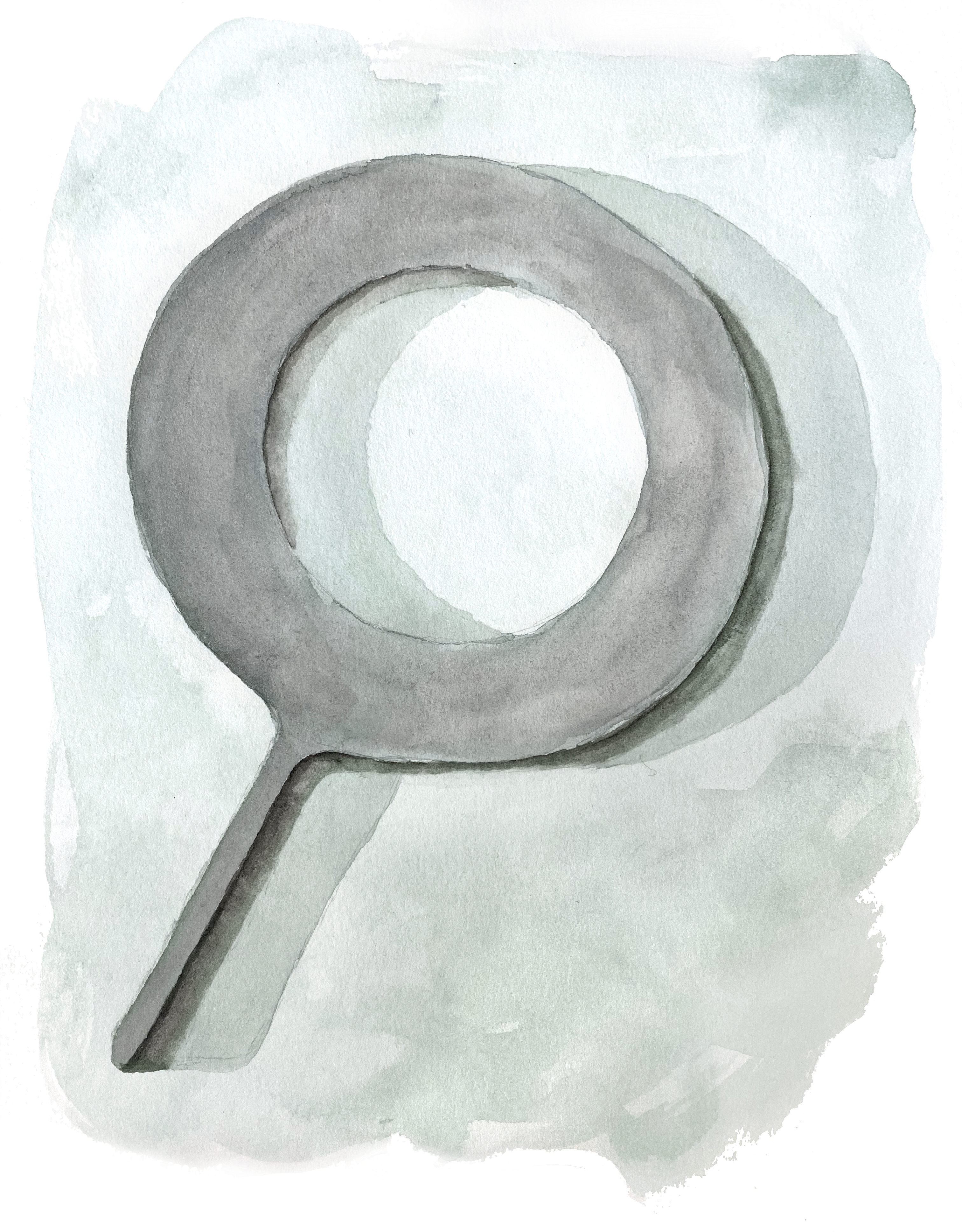
This, here, is a sim-card ejector. Or, rather, that is just the label we assign it.1 From the perspective of the object, though, that is a horribly unjust flattening of everything about itself. ‘Ejecting sim-cards', for instance, is but one of the many uses it might have. You could use this same object for, eg. scraping out dirt from under your fingernails, or etching your name on a rock, or blowing tiny soap bubbles.
(And that is only when we're thinking about the object in terms of its 'uses'. But what of everything else about it? Do you know how the sunlight reflects off it? How it feels when gently pressed against your palm? How it tastes?)
The point is, searching for 'deep understanding' is a quest without limit. You write code in python? Do you know what's happening in the packages you're calling? Well, do you know how the language is compiled and run? Do you know C? Machine code? How bits are processed on a computer? Heck, how do computers work in the first place? And what's up with electricity again? The quest for understanding is a rabbit hole that goes straight down to wonderland.
And sure, you can definitely have greater mastery over certain domains than others. But, especially if you work in the modern day and age, you're standing on foundations that others have erected. Abstractions that are floating far above the ground. You can dig for ages, and still never hit bedrock.
There's no special reason for the floor you're currently on. In fact, if there's any direction you'd go, it would be up. As you climb higher, you find abstractions that are more expressive and powerful. The rarified air helps you see clearer, see farther. You float on clouds – on tools, systems, and frameworks that let you fly miles high in the sky, unburdened by the worries of those trudging below. If you ever descend, it's often because you want to make life better at the higher levels you're perched on. (Or, because you *enjoy* getting into the muck & working with the details).
--
Mastery over an interface can be a source of great meaning. But that doesn't mean we should be afraid of new tools.
For one, new tools might often be more powerful and expressive than extant ones. Sure, if you were born in the 80s, there's a part of you that might actually enjoy going through pages of stack traces and segfaults. But we're not going to be training LLMs anytime soon in C. If you have tractors, then you can't have people digging ditches with teaspoons.
Sure, at times, it could be useful to get down into the weeds. Other times, though, it's more like knitting. This might be something that helps you wind down, or serves as a social pastime, or it might just be something you find meaningful. However, if you want a blanket, you're probably getting one that's been put together by a machine.
This, if you squint, is also the story of The Bitter Lesson. Throughout the history of AI, people have struggled to make machines think the way we do. To do so, they impose strict structures and finicky constraints, based on our own (limited) understanding of self-cognition. And time and time again, these rich and complex approaches have lost out to more general methods that leverage computation instead.
The reason this works is Moore's Law. Computers have gotten cheaper and faster year on year on year. General purpose methods that leverage this capacity, will scale far better than any fixed, finicky methods involving algorithmic tricks or human-like structures.
Wariness of human-imposed structures is relevant for not only training models, but also using them. It's easy to get attached to our domain, our work. It's easy to cling on to the tools we've grown comfortable using. However, at the end of the day, if AI systems continue to become more capable, the tools that will succeed are those that scale with this new interface afforded to us.
--
This is a period of change. Change is valuable. It's a re-rolling of the dice. It's wiping the slate clean, for the chance of a better future. But while it has many real benefits, it's also not easy to dismiss its costs. We often do get attached to the interfaces we have. It's a sort of creeping, growing calcification that's natural for times of dormancy. The image here, is a once-proud log, now lying in a forest. Its bark was once sturdy and hard. Years of decomposition have eventually led to moss, then ants, then a teeming community of life to grow atop this log. If you skin the bark off, if you shake up the current system, then you're losing this rich complexity that has built up over time.2
And this happens everywhere. Progress is cumulative. Regularities matter. They let you do cool things atop. Regularities let you know where your friends' classes are, and who might you bump into when walking to your 9am. They also let you build a civilization atop the glue of communication and trust – if done right. It's only when you have your basics in place – food, water, shelter, etc – can you worry about self-actualization and higher-order goals.
--
What then, about the details? Must we be conscribed to spending our hours in front of a chatbox with a glowing caret? Or will we ever feel the sun on our skin and the breeze in our hair again?
Well, false dichotomy. Sure, change might mean we're never as proficient with our tools as we'd like. But, if you've ever found joy in your work, I'm confident that you can do so again. The world is wide and various. There will always be challenges that arise – be they external to us, or internal. There is room to knit and to crochet. There is still space for the small.
Footnotes
-
https://www.lesswrong.com/s/evLkoqsbi79AnM5sz/p/bRcsFM6jm272ELyx8 ↩
-
Venkatesh Rao has some evocative writing, not too far from this mark. ↩